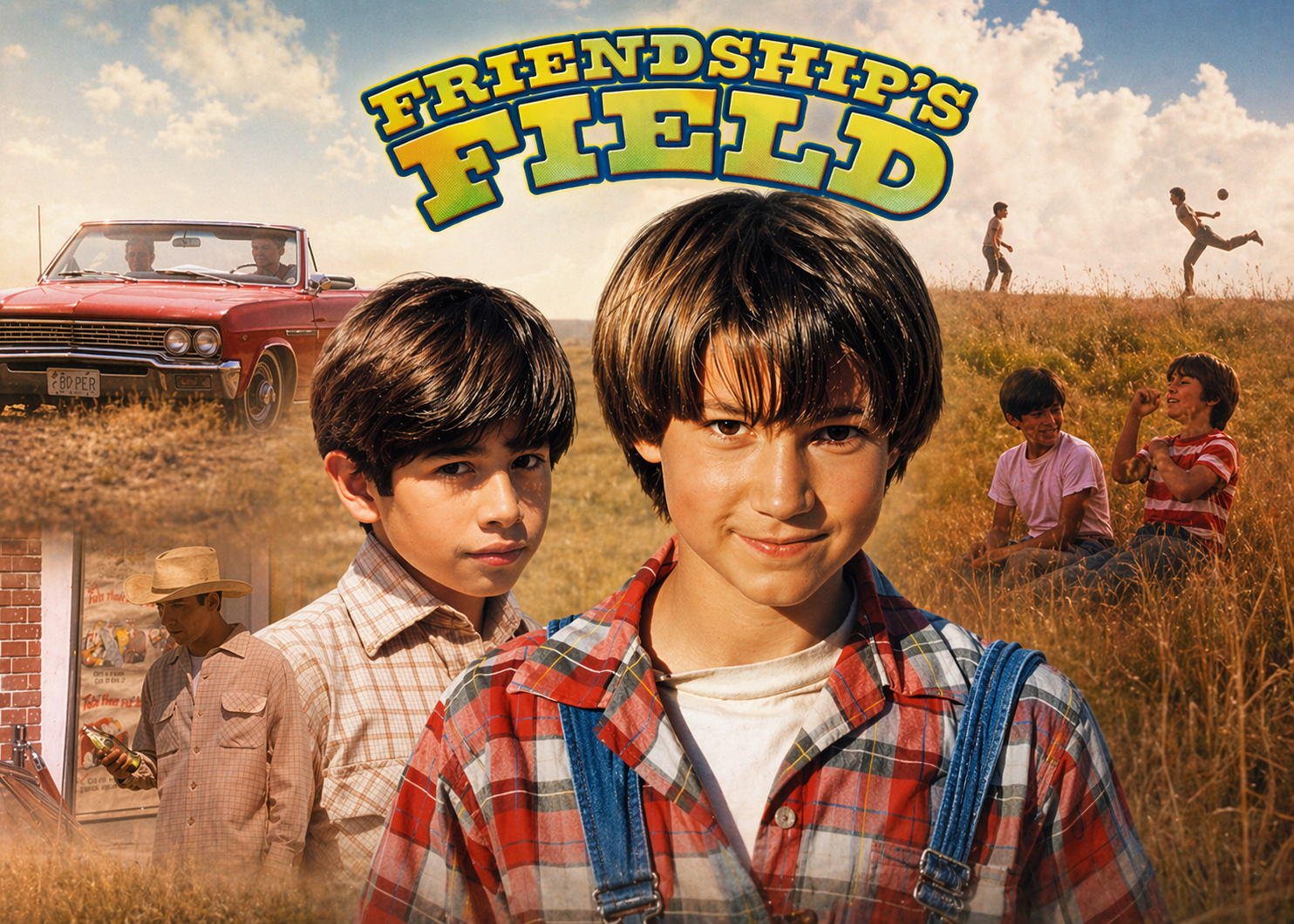
About Friendship's Field
Summer, 1964. Ira is eleven, boyish, and the odd one out in her own family. When Oscar's family arrives from Mexico to work the beet harvest, she calls them "the enemy" — until her father takes her to the camp and she's playing soccer with Oscar five minutes later. What grows across that summer is quiet, genuine, and completely undone by a single night of violence that neither of them caused.
A group of local boys drives recklessly through the labor camp. Oscar's brother is hurt. A wall goes up — not from malice, but from pain. The friendship collapses without a word being said. Immigration agents arrive before Ira can say goodbye. She never sees Oscar again.
The film ends with elderly Ira playing bagpipes at a cemetery, honoring unnamed people no one else remembered. It is the answer to everything the summer asked.
When a group of people who are pretty much alike suddenly comes in contact with a group who are different, they tend to stop thinking of them as people. It takes a lot of effort to understand a person — especially one who's different. Will you try?— Ira's Father, Friendship's Field
SEL Concepts
Empathy Across Difference
Two children build a friendship across cultural and social barriers — not by ignoring the differences, but by being curious about them.
Prejudice & Assumption
The film shows prejudice not as villainy but as something ordinary — what happens when people stop seeing a group as individuals.
Moral Courage
Ira stands up for Oscar alone, outnumbered, in a fight he isn’t part of, for a friendship that’s already broken. Students explore what it actually costs to do the right thing when no one is watching.
Loss & Legacy
The friendship doesn’t fully repair. Students sit with a story that doesn’t resolve — and consider what it means to be shaped by something even after it’s gone.
Who Children Will Watch Closely
Children observe characters, not themselves — the distinction that makes the learning land.
Eleven years old, dismissed by her own sisters for being too boyish, too strange. She calls the workers "the enemy" — until her father takes her to the camp and she's playing soccer with Oscar in five minutes. A label dissolved by a single afternoon.
"Why do you think Ira changed her mind about Oscar so quickly? What made the difference?"
Quiet, kind, and unbothered by Ira's strangeness — because he has his own. He tells her she's "not normal too" like it's a compliment. He sees her more clearly than anyone in her own family does.
"Oscar says 'you're not normal too' — why does that make Ira feel good instead of bad?"
Takes Ira to the camp. Tells her: "He is a person just like we are." Not preachy — just consistently right, which makes him the quiet model the program returns to.
"Why do you think Ira's dad was the one who helped her see Oscar differently? What did he understand that others didn't?"
The film's narrator and its final answer. Her gesture at the end — bagpipes at a cemetery for people no one else remembered — says everything about what she learned that summer and never forgot.
"Why do you think elderly Ira still plays the bagpipes at that cemetery? What is she saying without words?"